
SPECIAL EDUCATION INSIGHTS
When You Know More,
You Can Ask Better Questions.
Practical guidance from Maureen Brown on IEPs, special education advocacy, BSEA decisions, therapeutic placement, college transition, and the questions families don't always know to ask.
Find guidance based on what you're working through right now.
LATEST FROM THE BLOG
Recent Insights From Maureen
Practical guidance on IEPs, advocacy, placement, transition, and the decisions families are facing right now.

Should Dyslexia Be Its Own Special Education Category? What Parents Need to Know
Option 2: Bold + Opinion (your voice)
Here we go again… changing labels instead of fixing the real problem.
A new bill would make dyslexia its own category under the Individuals with Disabilities Education Act.
Yes, dyslexia needs attention—but let’s be honest:
👉 Kids aren’t struggling because of the category
👉 They’re struggling because they’re not getting the right support
Focus on services. Always.
Bringing School District Funding to the TableConsultation Services for National Association of Therapeutic Schools and Programs (NATSAP) Programs & Private Schools
What Ask the Advocate can help programs with
District Funding Strategy for Therapeutic & Private Schools
Advocacy Consultation for National Association of Therapeutic Schools and Programs Programs
IEP & FAPE Alignment Review
Family Education on Public Funding Pathways
Case Positioning & Documentation Guidance
District-Facing Communication Strategy
Professional Development & On-Site Training
Ethical Funding Frameworks That Reduce Conflict

A.J.T. v. Osseo Area SchoolsWhat This Supreme Court Case Means for Parents of Children with Disabilities
In AJT v. Osseo Area Schools, the U.S. Supreme Court addressed an important question about the rights of students with disabilities and the legal standards families must meet when seeking remedies under federal disability laws. The case centers on whether families pursuing claims under Section 504 of the Rehabilitation Act and the Americans with Disabilities Act (ADA) must prove a higher level of wrongdoing—such as bad faith or gross misjudgment—beyond what is required under IDEA.
The outcome has significant implications for parents seeking accountability when a school fails to provide appropriate supports. At its core, the case highlights the ongoing tension between procedural compliance and meaningful access to education, and it may clarify how difficult it is for families to obtain relief when schools fall short of their obligations.
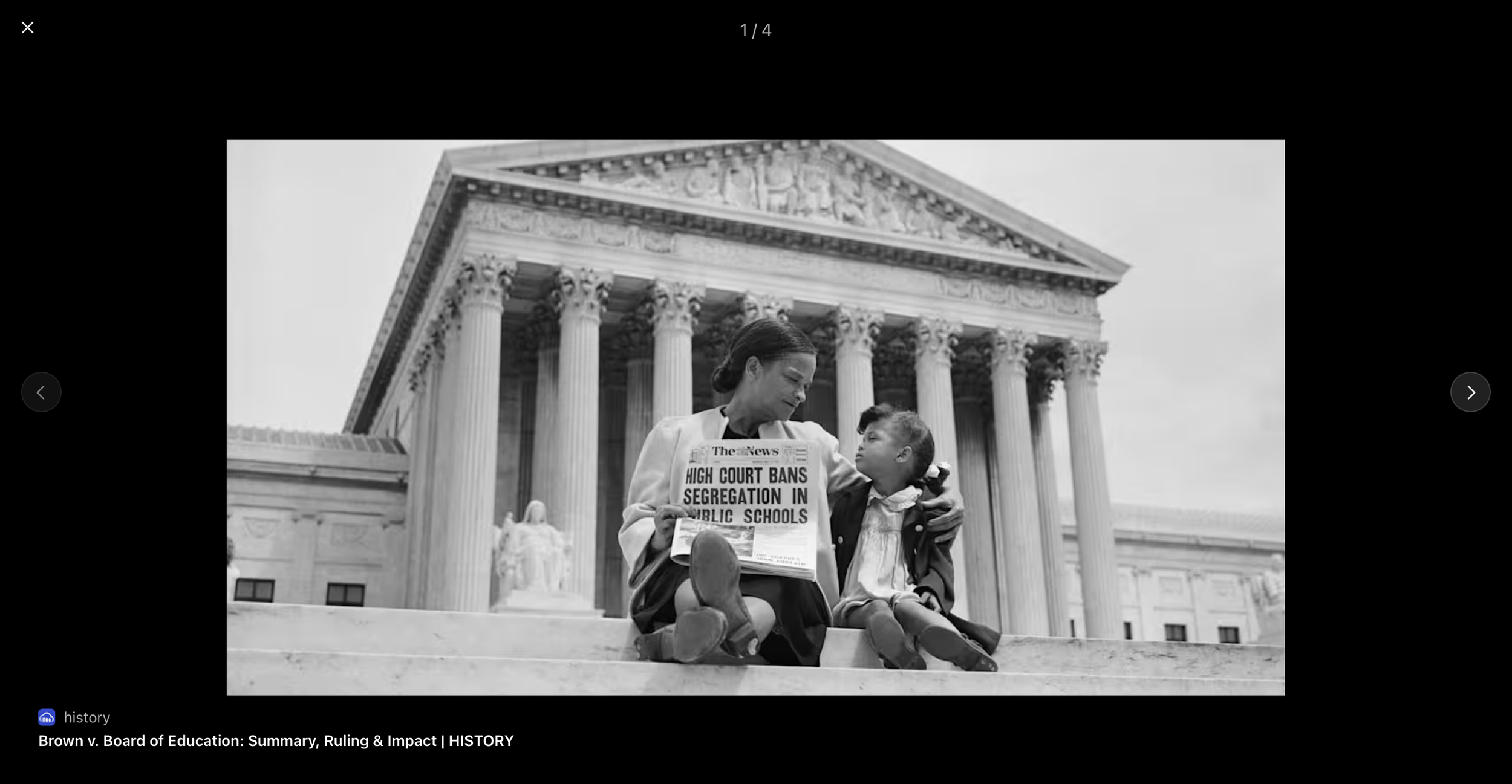
Brown Vs Board
Brown v. Board of Education: Why This Case Still Matters—for Race and Disability
When people hear Brown v. Board of Education, they usually think of one thing: race. And rightly so. In 1954, the U.S. Supreme Court ruled that racial segregation in public schools was unconstitutional, declaring that “separate educational facilities are inherently unequal.” That decision dismantled the legal foundation of segregated schooling in America.
But here’s the part that doesn’t get talked about enough: Brown v. Board didn’t just change education for students of color—it laid the groundwork for the rights of students with disabilities.
And that matters. A lot.
Before Brown: “Separate” Was the Norm
Prior to Brown, school systems openly excluded entire groups of children—by race, by disability, or by perceived “difference.” Students with disabilities were routinely denied access to public schools altogether. Many were labeled “uneducable,” sent home, institutionalized, or warehoused in segregated settings with little to no instruction.
The logic was simple and brutal: some children don’t belong.
Brown shattered that logic.
The Core Principle That Changed Everything
The most powerful legacy of Brown isn’t just desegregation. It’s the principle of equal access to education.
Once the Court said that denying equal educational opportunity was unconstitutional, it opened the door for families of children with disabilities to ask a dangerous (to systems) but necessary question:
👉 If segregation by race is unconstitutional because it denies equal opportunity, why is exclusion or segregation based on disability allowed?
That question sparked a legal and civil rights movement.
How Brown Led to Disability Rights in Education
Brown directly influenced later court cases and legislation that protect students with disabilities, including:
Education for All Handicapped Children Act, later renamed
Individuals with Disabilities Education Act (IDEA)
IDEA is built on the same foundation as Brown:
Public education is a right, not a privilege
Schools cannot exclude students based on characteristics they didn’t choose
Separate systems almost always mean unequal systems
The concept of Free Appropriate Public Education (FAPE) exists because Brown established that public education must be meaningfully accessible to all children.
Why This Still Matters Today
Let’s be honest: segregation didn’t magically disappear. It just changed form.
Today, we see:
Students with disabilities placed in restrictive settings without proper justification
Children of color overrepresented in substantially separate programs
Families told “we don’t have that here” instead of “how do we make this work?”
Brown reminds us that systems don’t give up power willingly. Progress happens because families push, challenge, and demand better.
The Bigger Picture
Brown v. Board of Education wasn’t just about race.
It was about belonging.
It was about access.
It was about refusing to accept that some children deserve less.
That legacy lives on every time a parent questions a placement, requests evaluations, challenges exclusionary discipline, or insists their child deserves more than the bare minimum.
The fight for educational equity didn’t end in 1954.
And it didn’t end when IDEA passed.
It continues—every single time a family refuses to be told their child is “too much,” “not ready,” or “not appropriate.”
Because separate is still not equal.
And never was.

From Burlington to the National Stage: Invited to Speak at the 2026 NATSAP Annual Conference
From Regional Impact to the National Stage: Speaking at the 2026 NATSAP Annual Conference
From Burlington to the National Stage: Invited to Speak at the 2026 NATSAP Annual Conference
Last October, I had the opportunity to speak at a regional National Association of Therapeutic Schools and Programs(NATSAP) conference in Burlington, Vermont. The room was filled with program leaders, clinicians, and educators who do this work every day—supporting students with complex emotional, behavioral, and mental health needs.
The conversation was real, practical, and candid. We talked about what actually happens when families are trying to access therapeutic placements, how school districts make decisions behind closed doors, and where things most often break down for parents and programs alike.
That session sparked meaningful dialogue—and clearly struck a nerve.
As a result, I was invited to take that work to the national stage.
I’m honored to share that I will be speaking at the 2026 NATSAP Annual Conference, Many Voices, One Mission, taking place February 9–12, 2026, in San Diego, California.

New Offerings Employer & EAP Services
Specialized Education Navigation for Working Parents
Ask the Advocate® partners with employers and Employee Assistance Programs to support working parents navigating complex school, IEP, and placement challenges. Our services reduce caregiver stress, improve retention, and provide expert guidance not typically available through traditional EAPs.
MASSACHUSETTS BSEA DECISIONSBSEA Decisions, Without the Legal Jargon.
When a special education dispute in Massachusetts reaches the Bureau of Special Education Appeals, the decisions can tell families a lot about how hearing officers look at evidence, placement, evaluations, stay-put rights, district obligations, and FAPE. Maureen breaks down selected BSEA decisions in plain language so you can understand what happened, why the hearing officer ruled the way they did, and what families can learn from the case.


NEED MORE THAN AN ARTICLE?
Your Child's Situation Isn't Generic.
Your Next Step Shouldn't Be Either.
Articles can help you understand the issue. But your child's records, history, school district, and current situation determine what comes next. If you need help figuring out your next move, start with the level of support you need.
I NEED DIRECTION
Education Strategy Session
A focused 30-minute conversation with Maureen to talk through your situation, understand your options, and decide what to do next.
I NEED MY DOCUMENTS REVIEWED
Document Review + Strategy
Maureen reviews up to two documents before your 30-minute strategy call so you can discuss the records, concerns, and next steps together.
BSEA Decisions from Summer 2026.
How parents can use it to determine how hearing officers make decisions.