
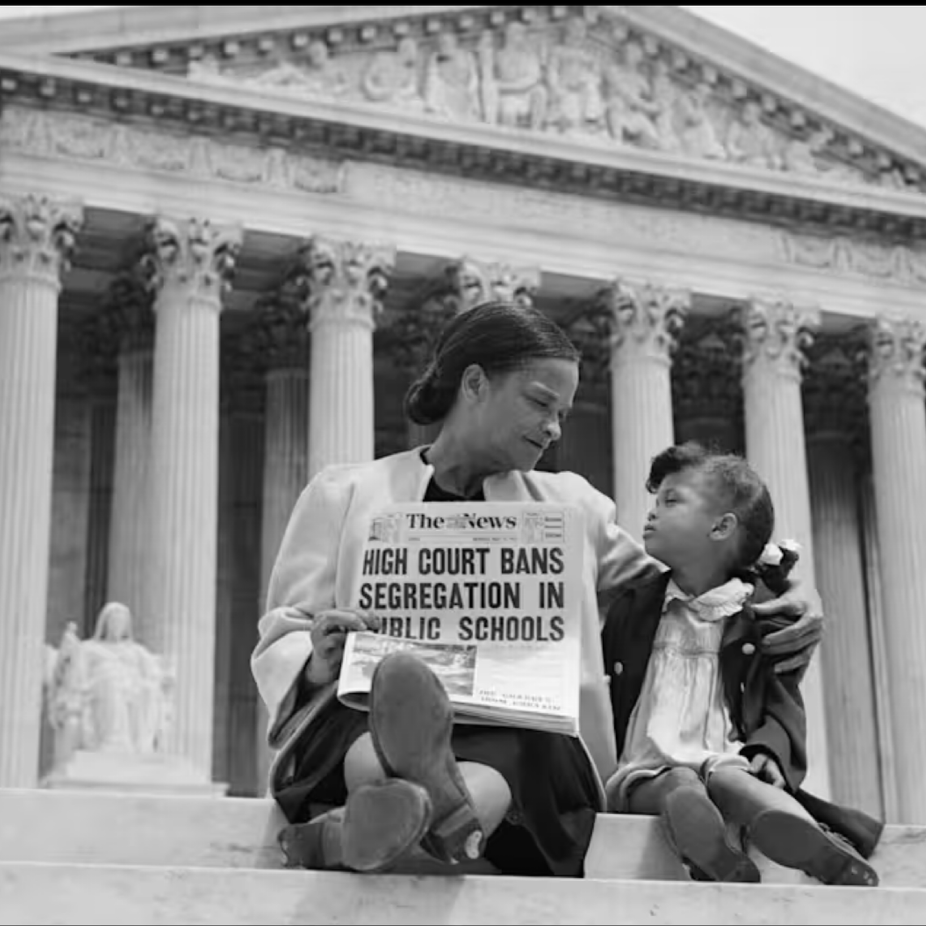
Brown vs. Education for Race and Students with Disabilities
Brown v. Board of Education: Why This Case Still Matters—for Race and Disability
When people hear Brown v. Board of Education, they usually think of one thing: race. And rightly so. In 1954, the U.S. Supreme Court ruled that racial segregation in public schools was unconstitutional, declaring that “separate educational facilities are inherently unequal.” That decision dismantled the legal foundation of segregated schooling in America.
But here’s the part that doesn’t get talked about enough: Brown v. Board didn’t just change education for students of color—it laid the groundwork for the rights of students with disabilities.
And that matters. A lot.
Before Brown: “Separate” Was the Norm
Prior to Brown, school systems openly excluded entire groups of children by race, by disability, or by perceived “difference.” Students with disabilities were routinely denied access to public schools altogether. Many were labeled “uneducable,” sent home, institutionalized, or warehoused in segregated settings with little to no instruction.
The logic was simple and brutal: some children don’t belong.
Brown shattered that logic.
The Core Principle That Changed Everything
The most powerful legacy of Brown isn’t just desegregation. It’s the principle of equal access to education.
Once the Court said that denying equal educational opportunity was unconstitutional, it opened the door for families of children with disabilities to ask a dangerous (to systems) but necessary question: If segregation by race is unconstitutional because it denies equal opportunity, why is exclusion or segregation based on disability allowed?
That question sparked a legal and civil rights movement.
How Brown Led to Disability Rights in Education
Brown directly influenced later court cases and legislation that protect students with disabilities, including:
Education for All Handicapped Children Act, later renamed
Individuals with Disabilities Education Act (IDEA)
IDEA is built on the same foundation as Brown:
Public education is a right, not a privilege
Schools cannot exclude students based on characteristics they didn’t choose
Separate systems almost always mean unequal systems
The concept of Free Appropriate Public Education (FAPE) exists because Brown established that public education must be meaningfully accessible to all children.
Why This Still Matters Today
Let’s be honest: segregation didn’t magically disappear. It just changed form.
Today, we see:
Students with disabilities placed in restrictive settings without proper justification
Children of color overrepresented in substantially separate programs
Families told “we don’t have that here” instead of “how do we make this work?”
Brown reminds us that systems don’t give up power willingly. Progress happens because families push, challenge, and demand better.
The Bigger Picture
Brown v. Board of Education wasn’t just about race.
It was about belonging.
It was about access.
It was about refusing to accept that some children deserve less.
That legacy lives on every time a parent questions a placement, requests evaluations, challenges exclusionary discipline, or insists their child deserves more than the bare minimum.
The fight for educational equity didn’t end in 1954.
And it didn’t end when IDEA passed.
It continues every single time a family refuses to be told their child is “too much,” “not ready,” or “not appropriate.”
Because separate is still not equal.
And never was.