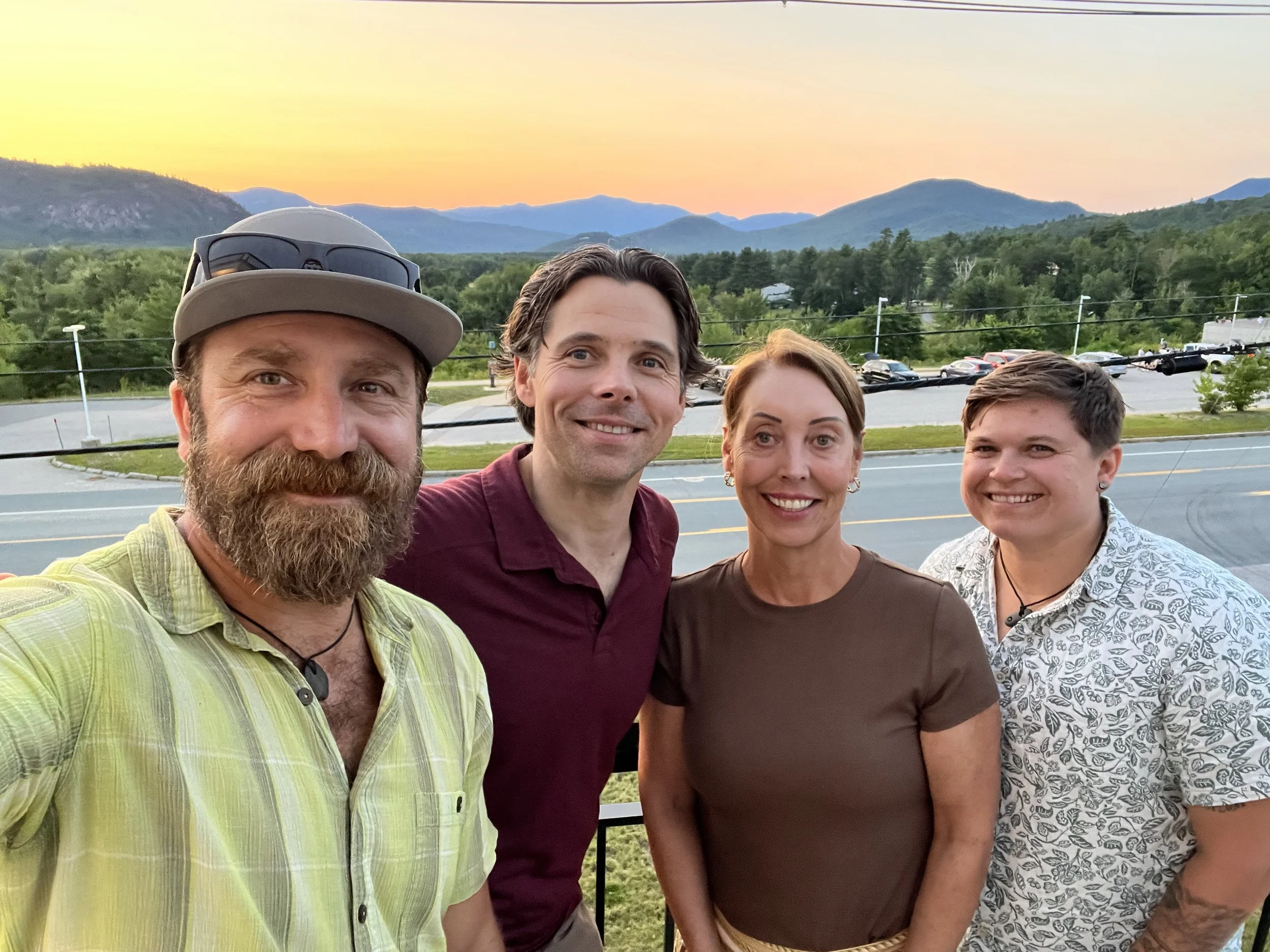
Amazing Staff at Summit Achievment
Reading a program's website or brochure can only tell a family so much. Photos get chosen for a reason, and program descriptions tend to sound similar after a while. What I can't get from a PDF is the feel of a place: how staff talk to clients in the hallway, whether the schedule on the whiteboard actually gets followed, That's why I keep touring, even after years of doing this work. A site visit gives me a firsthand read on culture, structure, and staff, and that read is what lets me guide a family toward a placement that actually fits their child rather than one that just fits on paper. This month I toured four programs, each built for a different stage of a young person's path toward independence. Here's a look at what stood out at each one.
Cornerstones of Maine
Cornerstones sits in Biddeford and serves young adults, generally from 18 into their 30s, working through a wide range of clinical needs: level one autism, OCD, anxiety, depression, personality disorders, and substance use, with a year of sobriety recommended before admission. Some clients are still finishing high school and are clinically complex despite being intellectually bright, and those managing psychosis get closer supervision and in-person psychiatric care. The days are mapped out on a shared calendar and whiteboard, with a maximum of 16 residents in the house. Coaches support medication routines starting at quarter to eight, and mornings move through community meeting, group therapy, and sessions like somatic therapy, sex education, and time at the gym. In the afternoons, therapist-coaches drive clients to classes at Southern Maine Community College, the University of New England, or the University of Southern Maine, alongside ongoing work on budgeting and self-care. Families get weekly updates and parent coaching, and most clients need six to nine months to make real, lasting change.
Clinically, the program pulls in a range of approaches: ERP for anxiety and avoidance, REBT, DBT, EMDR, and brainspotting, with an outside psychiatrist available for medication-complex cases. Process groups run four times a week and are intentionally mixed, and clients are connected to Portland's recovery community through AA, NA, and the Portland Recovery Center. On the financial side, the program works with some private insurance for residential coverage, offers a 30-day scholarship, and has two full 529 plan scholarships available.
Website: cornerstonesofmaine.com
Onward Transitions
Onward Transitions is a step further along the continuum, built for young adults roughly 18 to 30 and older who are living on their own but struggling, or who didn't make it through college on their first try. Clients live in their own apartments on year leases (some month-to-month), and the program also owns a guest house about a mile away that's been used for shorter transitional stays. With around 11 clients at a time, most already hold a high school diploma or GED.
What makes this program distinct is how woven-in the support feels. Individual therapy, groups, and shared meals with therapist peers happen inside daily life rather than on top of it, almost like an invisible village around each client. It's built for young adults managing ADHD, anxiety, depression, autism, OCD, learning challenges, or bipolar disorder that's well controlled on medication, since staying medication compliant matters here. It isn't a substance-primary program (harm reduction applies for clients of legal age) and it isn't a medical model, so eating disorders fall outside its scope.
Clinical work leans on exposure therapy, ACT, art therapy on Fridays, and motivational interviewing centered on personal values. Coverage runs Monday through Friday, with staff on call over weekends and referrals for weekend needs routed through outside consultants. Family involvement includes executive function groups, planned outings, and practice with meal planning, while parents stay involved in budgeting and spending money.
Website: onwardtransitions.com
Rubedo
Rubedo is Cornerstones of Maine's neurodivergent-affirming program, also based in Biddeford, and it's designed specifically for young adults on the autism spectrum, generally level one, between 18 and 28. It's a longer track, typically two years, with real attention paid to how clients are doing socially, including online friendships, alongside steady growth in independent living skills.
Clients here take classes at the University of Southern Maine, get peer advocacy support through Southern Maine Community College, or study at the Maine College of Art, and some hold part-time jobs with workplace accommodations and genuinely good relationships with their employers. The program stays small on purpose, capping around 12 to 14 clients, who get around the city by bus while living independently. Volunteer work, job exposure, and even peer-reviewed publishing opportunities help clients build real-world experience in stages, and staff are present around the clock. The population includes young adults with personality disorder traits, ADHD, and learning challenges across a wide range of cognitive profiles. If a client stays local afterward, aftercare is available: meetings, individual therapy, life coaching, psychiatry, music therapy, and support with daily hygiene routines.
Website: cornerstonesofmaine.com/neurodivergent-living-asd-autism
Summit Achievement
Summit Achievement is a therapeutic program in Stow, Maine, serving adolescents roughly 13 to 20, and it's built as one continuum rather than a set of disconnected stops. Students can move through the whole thing, start to finish, while keeping the same clinical relationships the entire way.
The first phase, called Achievement, blends wilderness and adventure therapy with clinical treatment and academics. Students spend part of the week on the 54-acre campus and part of the week on expedition, camping and building backcountry skills alongside their peers. Weekly family sessions and parent coaching run throughout, and this phase typically lasts six to ten weeks.
From there, students who need it move into Traverse, the on-campus therapeutic boarding school phase I spent most of my tour in. Traverse gives students more independence, including managing their own budget, while keeping the same clinical and academic team around them. Students attend school five days a week in small classrooms, capped at eight students, working through a self-paced curriculum built for credit recovery. Once a student reaches the second stage of Traverse, they earn back access to things like the internet, an iPod, Spotify, and TV. The academic model is genuinely individualized: students dealing with slower processing speed, inattentiveness, or dyslexia get supports like speech-to-text, preferential seating, printed and highlighted guided notes, and extended time built in from day one. When a new student arrives, the program's director sits down with teachers first to map out exactly what that student needs. Traverse typically runs two to six months, and combined with Achievement, a student can move through the full continuum in as little as fourteen weeks.
The schedule has real rhythm to it: an hour for lunch, study hall five nights a week, a Monday morning meeting with guides, a check-in with new guides on Tuesdays, lunch with a teacher on Thursdays, and counselor meetings on Mondays and Wednesdays, plus daily chores and responsibilities. This isn't a vocational or work-transition program. It's focused on rebuilding the skills and confidence a student needs to succeed back home, at a boarding school, or wherever comes next. According to the program's own outcome research, students who complete both phases tend to do better at discharge and beyond than those who stop after the first.
Website: summitachievement.com
Why Working with a Therapeutic Consultant Helps
Families usually come to this search already exhausted. By the time a parent starts researching residential treatment, transitional living, or a therapeutic boarding school, they've often been through years of school meetings, failed outpatient plans, or a crisis that forced the issue. Trying to also become an overnight expert on dozens of programs, each with its own admissions process, clinical philosophy, and insurance quirks, is a lot to ask of anyone in that position.
A therapeutic consultant does that research and relationship-building on an ongoing basis, not just once. I tour programs regularly, stay in contact with admissions and clinical staff, and hear directly from other families about how a placement actually went once the paperwork was signed. That gives me a working knowledge of fit that a family searching on their own, even a diligent one, usually can't build in the time they have. I can tell you honestly whether a program's clinical strengths match your child's actual diagnosis, whether the daily structure will hold up for a kid who struggles with executive functioning, or whether a program's description of itself matches what I've seen walking through it.
A consultant also acts as a second set of eyes and a steady hand during a stressful decision. I help families understand levels of care, sort through insurance and private-pay realities, prepare for admissions interviews, and think through what happens after discharge so a placement isn't just a good choice today but a good step toward what comes next. Getting this decision right the first time can save a family months of trial and error, and sometimes save a young person from a placement that never fit in the first place.
Touring is part of the work
None of these programs would come across the same way in writing as they did in person. Watching how a staff member redirected a client mid-conversation, seeing which rooms actually got used during the day, hearing how families talk about a program once they've lived with it for a few months: none of that shows up in a brochure. When I sit down with a family to talk through placement options, I want to be recommending a program I've walked through myself, not just one I've read about.
If you're weighing a therapeutic placement for your child and want to talk through what I saw at any of these programs, or want help figuring out which continuum of care actually matches where your child is right now, reach out and let's set up time to talk it through together.